Architectural Design
January 15, 2024
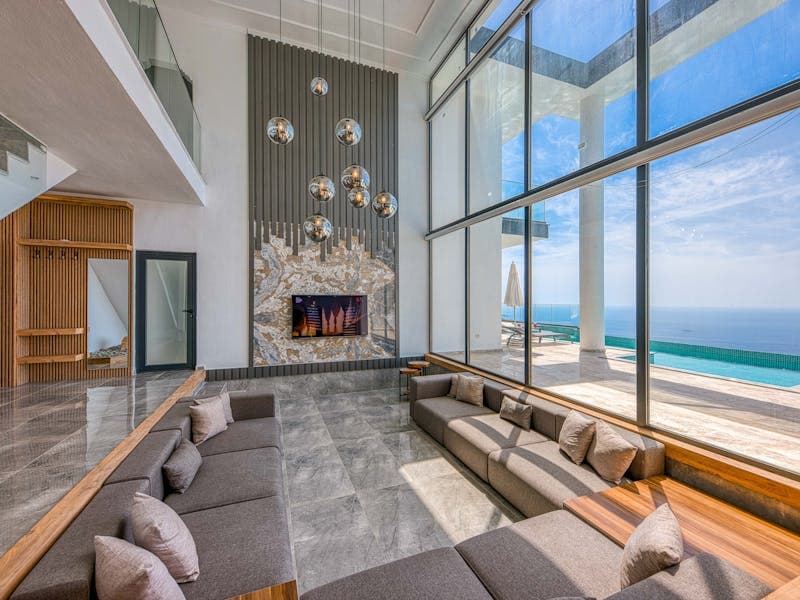
Villa interior design brings together the correct configuration of generous spaces, the balanced use of premium materials and the contribution of lighting to quality of life. Every decision must be evaluated for both aesthetics and long-term comfort.
In villas, organising kitchen, dining and living areas in a single continuous flow is the leading approach for visual breadth and centring family life. In this configuration, free movement of light, continuity of floor finish and consistency of the colour palette reinforce a sense of unity. The practical questions of noise and odour management in an open plan are answered by well-designed ventilation and an effective cooker hood.
Raising ceiling height from the standard 2.7 m to 3.2–3.6 m in villa spaces adds both a sense of freedom and architectural distinction. A 4–5 m double-height void in the entrance hall or reception room can be a powerful design statement that defines the villa's character. With high ceilings, heating and cooling systems must be sized accordingly to maintain energy efficiency.
Natural stone (marble, travertine, granite), solid timber and brass do not lose aesthetic value over time and, with regular care, offer decades of service life. Using 90×90 cm or larger format porcelain tile or natural stone on the ground floor creates fewer grout lines, easier cleaning and a visually larger space. Natural timber flooring on upper levels adds warmth and prestige.
In villas, a layered approach is recommended over single-type lighting: LED strip concealed profiles and surface-mounted downlights for ambient lighting; accent spotlights for focal points (artwork, sculpture, feature corners); decorative pendant fittings above the dining table and seating group. This combination provides the flexibility to create different atmospheres for different activities and moods. Natural light entering from the south facade, directed deep into the interior through careful window placement and reflective surfaces, delivers both comfort and energy savings. The Home Yapı Mühendislik Interior Architecture team develops personalised, functional and durable interior solutions for every villa project.

Driven by our love for people and the environment and respect for our craft, we have been providing architectural and contracting services since 2010.
Interior Architecture